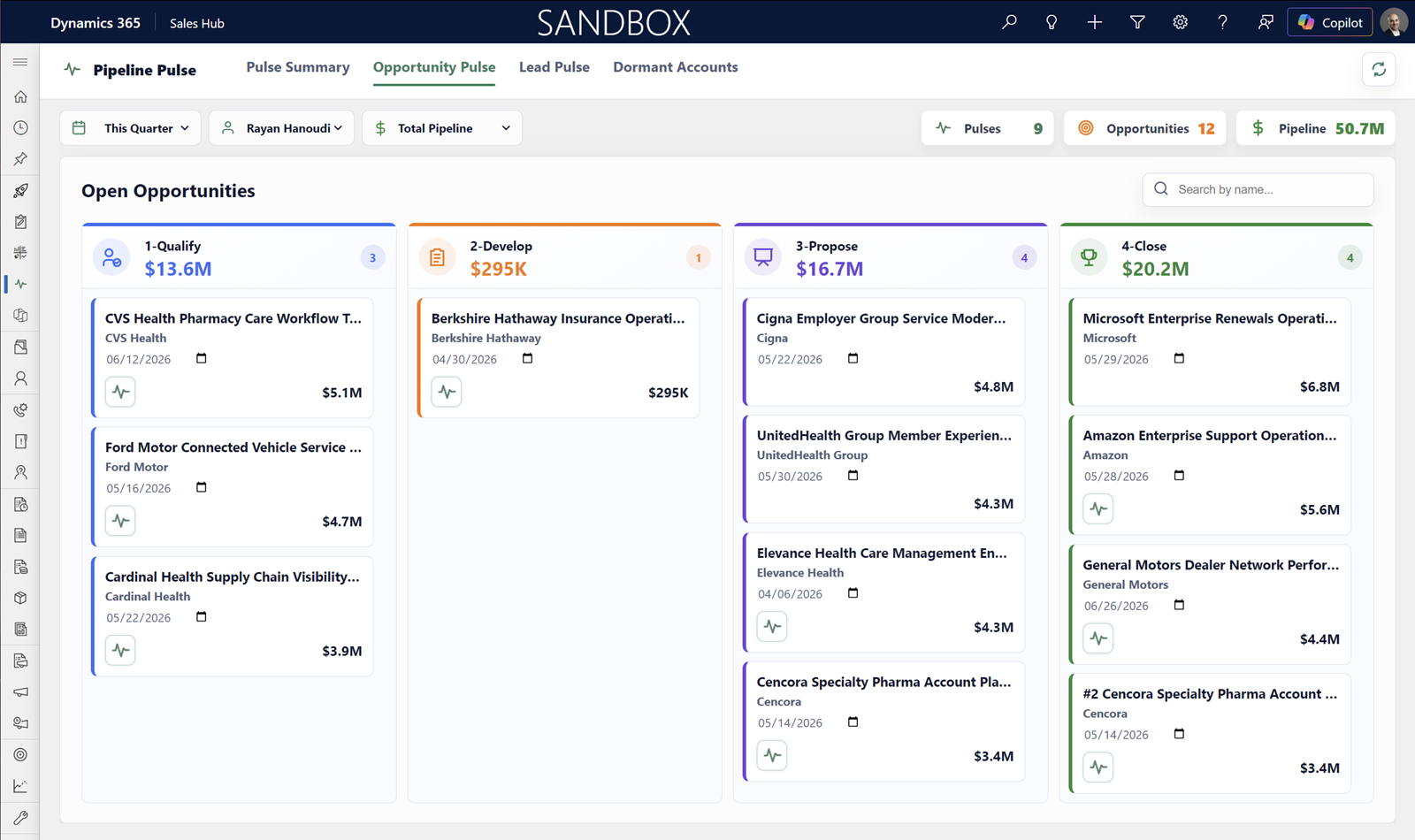
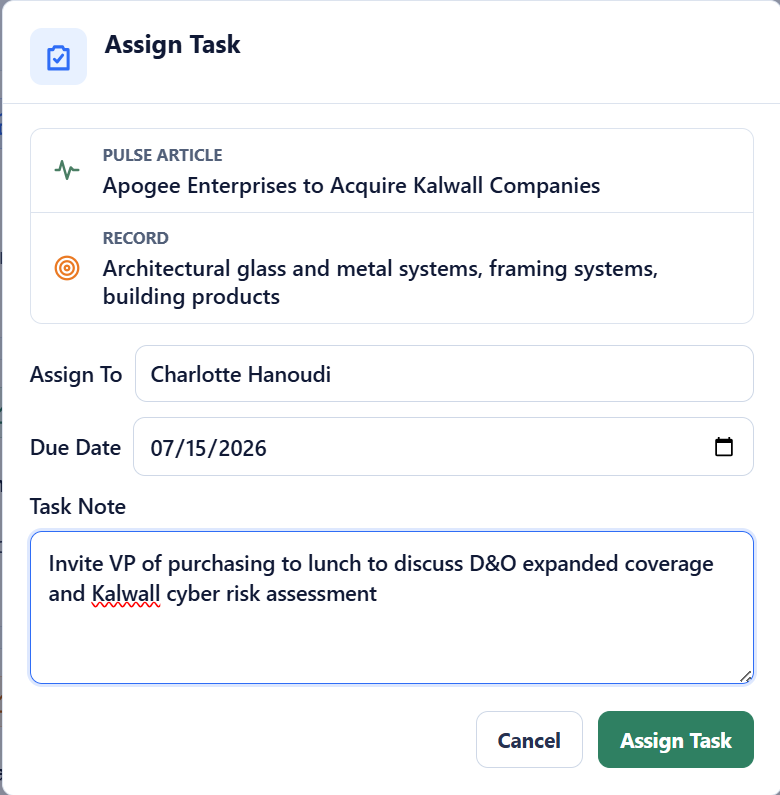
Pipeline Pulse installs on top of Dynamics 365 and tells your reps which accounts to call today and exactly why. It's configured around your clients, your geography, and the signal criteria that move your deals.
UnitedHealth Group announced $1.2B+ in affordable-housing investments this year, with explicit HVAC and renovation budget your team can position against this week.
Built and shipped by a team that has lived inside Dynamics 365 for a decade.
Pipeline Pulse installs as a Microsoft AppSource solution, reviewed and signed.
Pulse turns outside signals into the selling angle and next action for each account.
About one hour of IT time on install day. Live insights by the next business day.
The CRM shows every open lead and opportunity, ranked by whatever they last clicked. There's no signal for what's moved since Friday.
A $40K lead and a $4M lead live in the same view, sorted the same way. The reps who hit number are the ones with the time to dig. The rest don't.
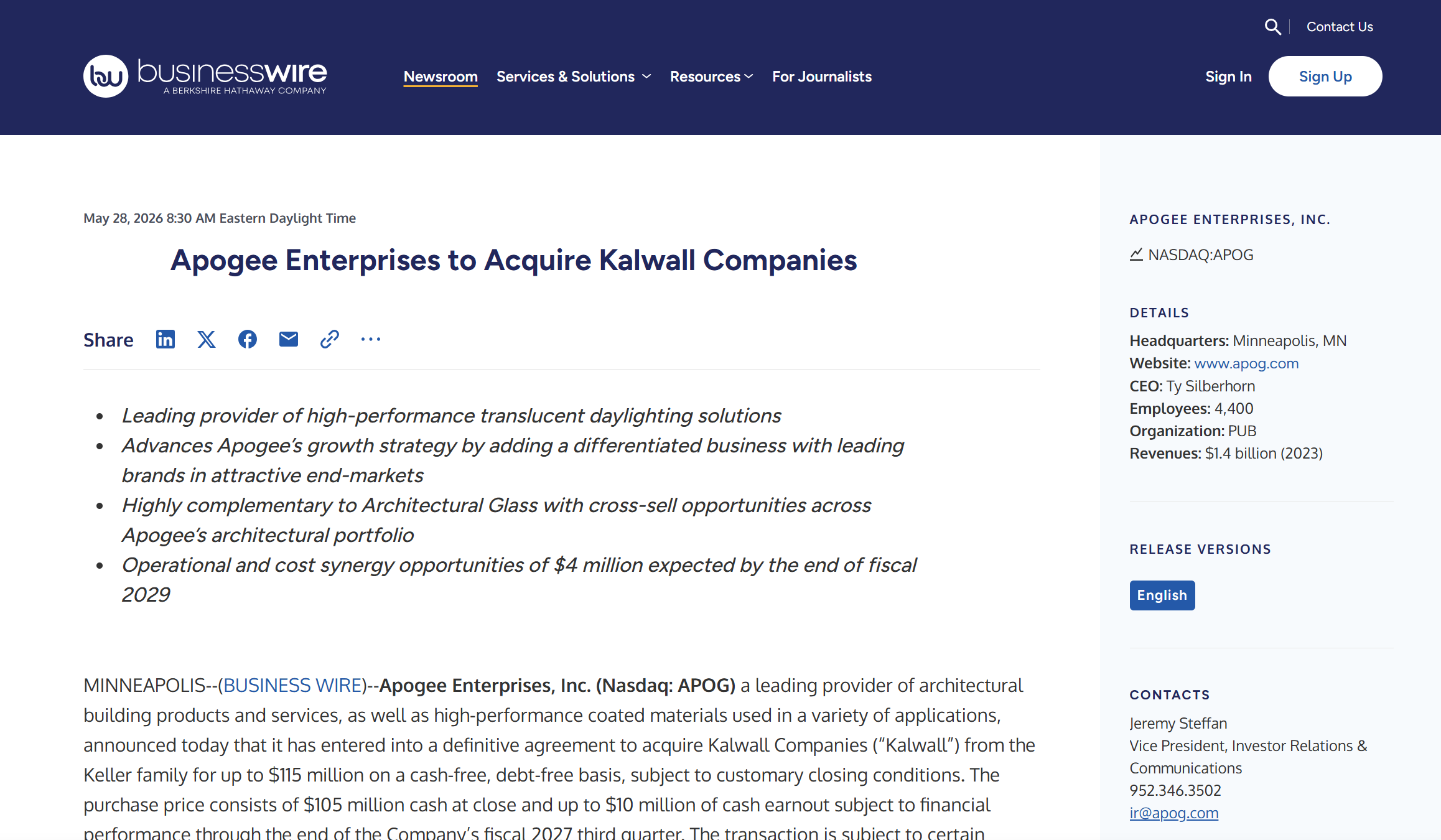
An account just opened a new plant, lost a CFO, announced a funding round. Somewhere a press release went out. Your rep finds out on the call, from the buyer.
Stage hasn't moved in three weeks. Reason: unknown. The review becomes a status meeting with no decisions and no next steps.
The CRM was designed to record, not to recommend.Dynamics is built around fields, stages, and reports. It captures what already happened. It was never meant to look outward at the world your accounts are actually operating in.
News and signals live outside the system of work.Press releases, earnings calls, leadership changes, expansions. All of it lives in 14 browser tabs your rep doesn't have time to open between calls.
Every rep does this work alone, badly.The good ones build their own watchlists. The rest don't. The result is a team where prioritization quality varies wildly by who happens to be on the account.
Most CRMs drift into databases where reps log what already happened. Pulse makes the CRM the place reps go first. Because it tells them what to do next, and why.
Every insight is tied to a real account in your pipeline. Every signal comes with a plain-English explanation of why it matters. The result is a sales team that spends less time researching and more time in front of customers.
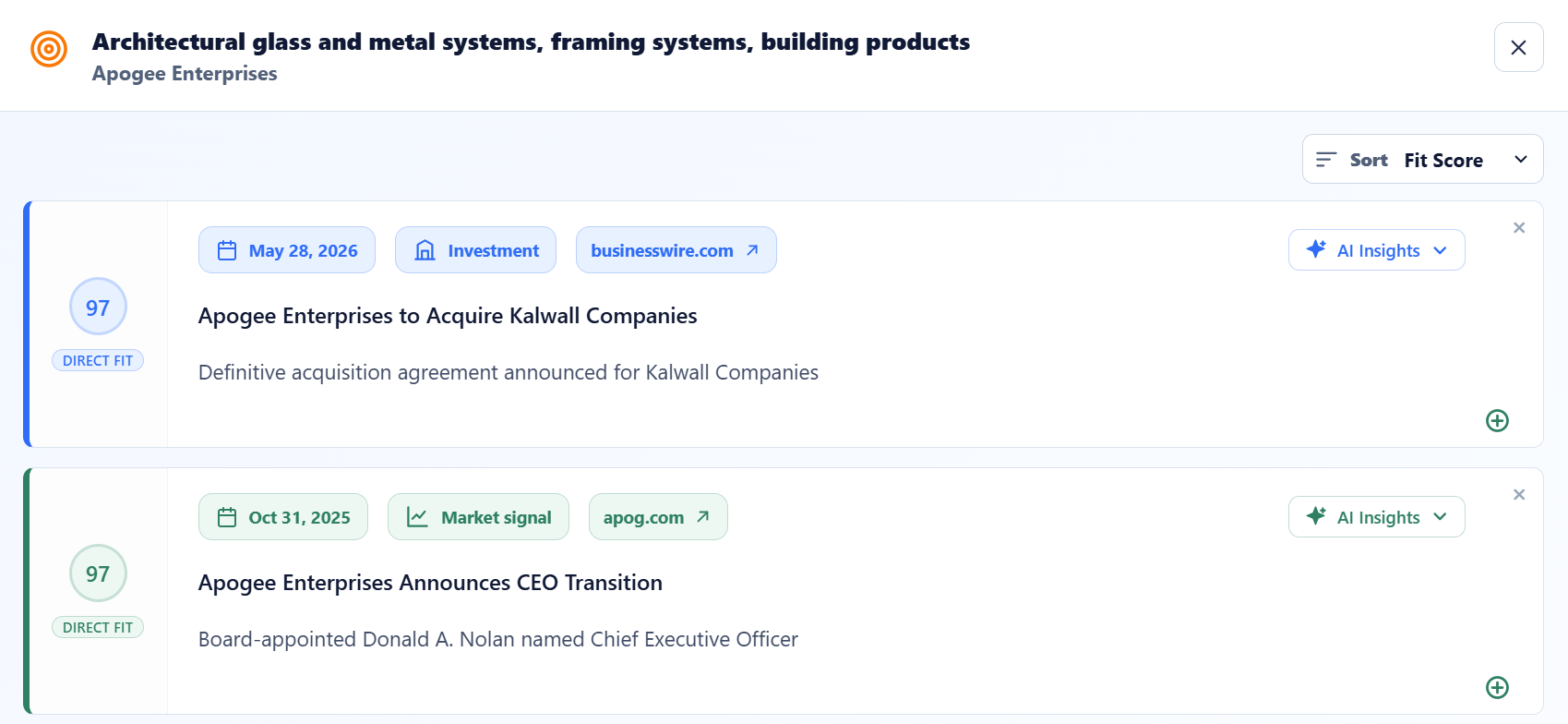
Not more dashboards. Not more reports. Two things on every card: the correct signal (matched to your accounts, your geography, your criteria) and the AI insight that names the selling angle and the next action.
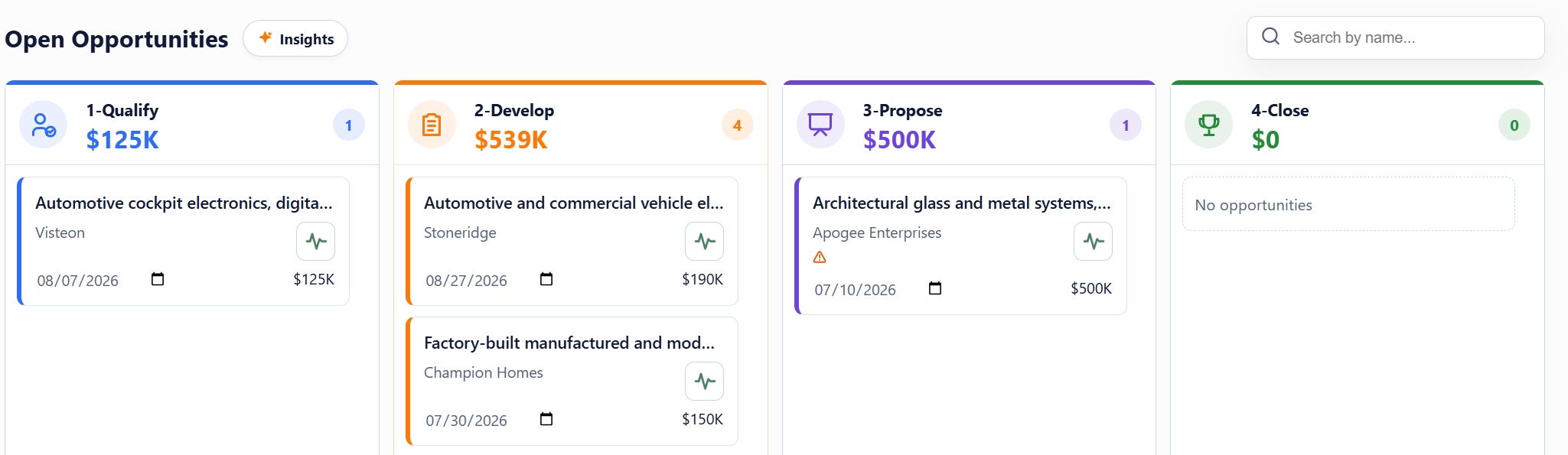
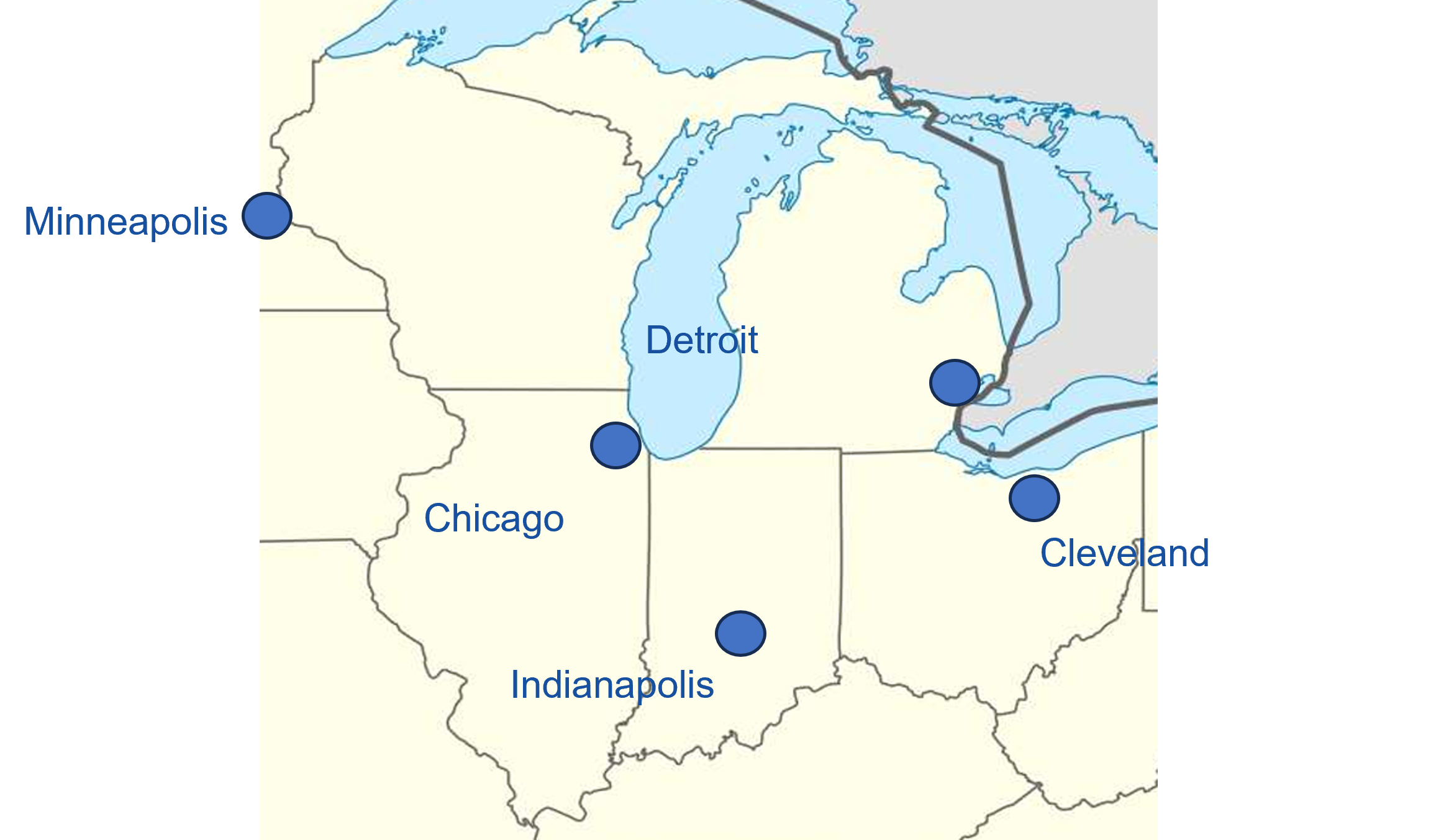
Every morning, a ranked list of accounts where something just changed, filtered against your industries, ICP, and the territories, cities, states, and regions your team actually sells into.
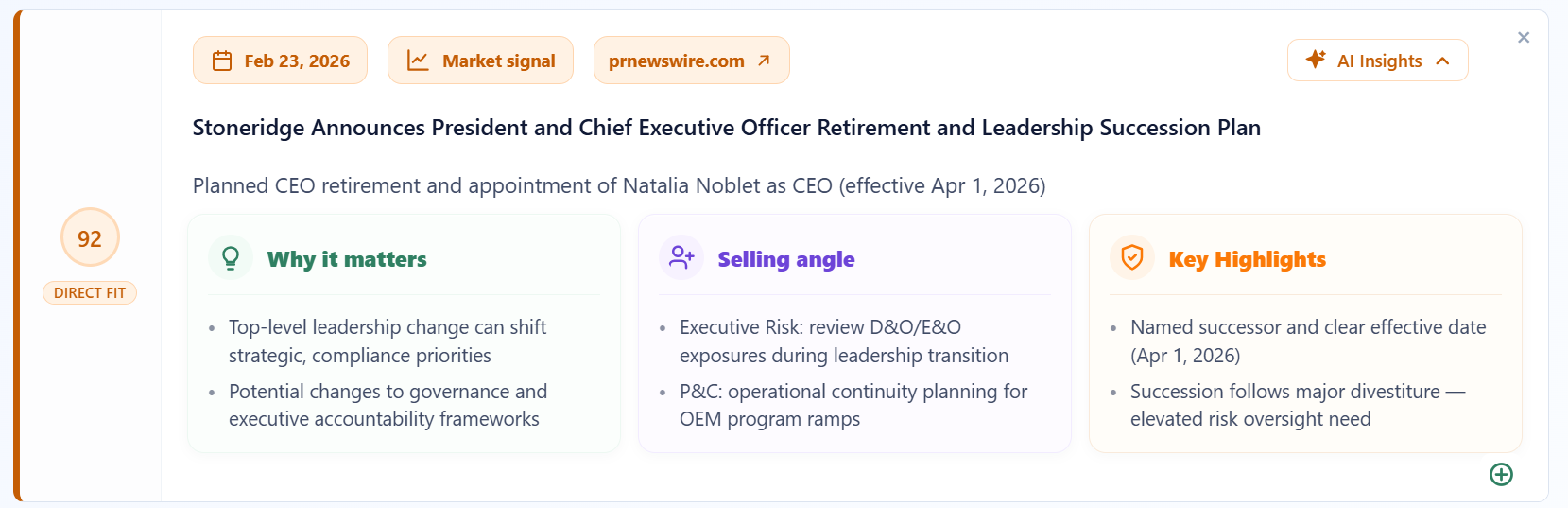
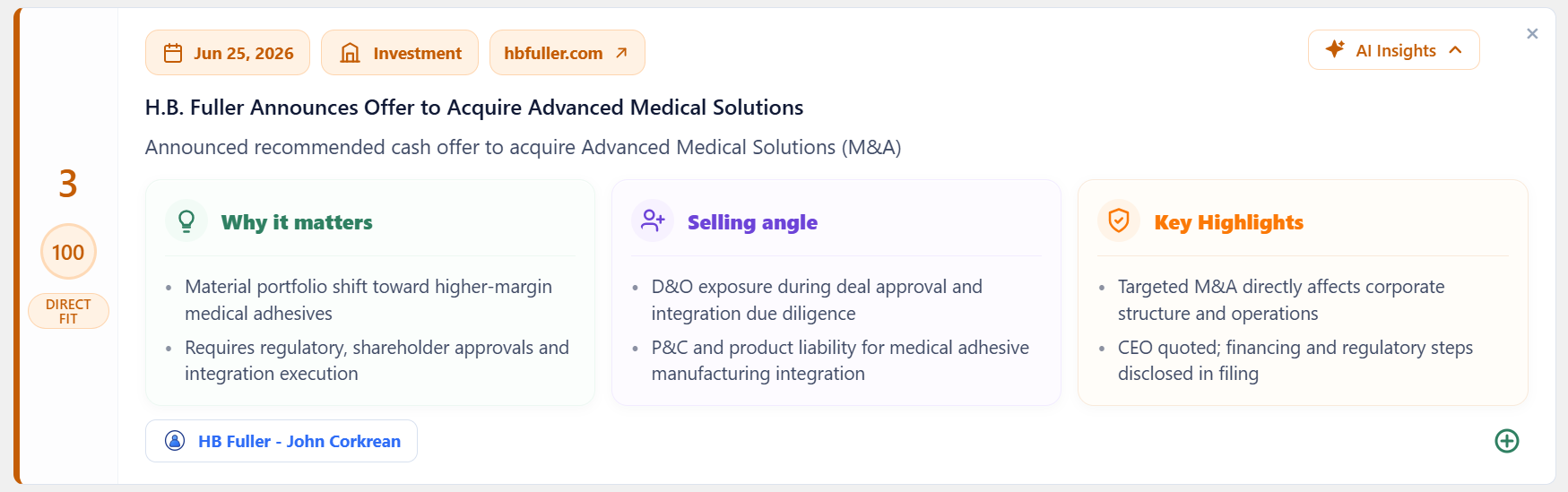
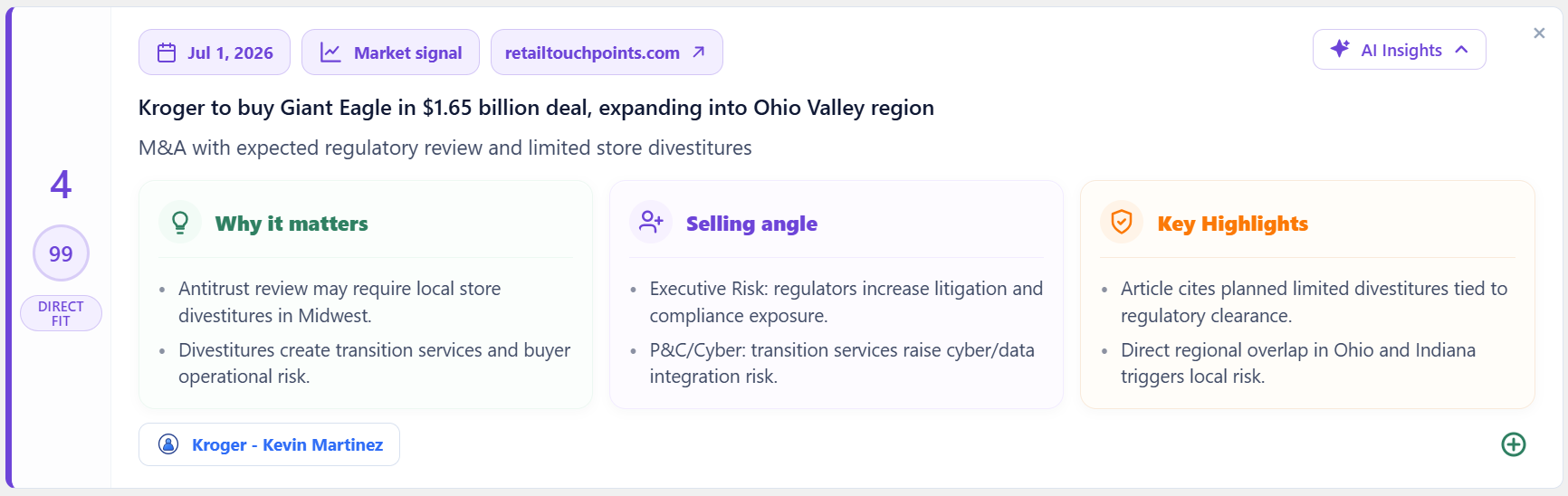
Each card carries an AI-written angle, not a summary. It interprets the news against your offering and the account's stage, then names the selling angle and the next action. The "so what" lives next to the data.
Pulse Summary rolls up every rep's pipeline into one view, weighted by recent signal, so the Monday review starts at the accounts that need a decision.
Reps live in the Dynamics 365 mobile app between meetings. Pulse rides along: same ranked feed, same AI angles, same source links, on the phone they already carry.
Because Pulse lives inside Dynamics, every view (scored cards, AI-written angles, source links) rides along on the Dynamics 365 mobile app your reps already have installed. No second app to push through IT, no second login to forget. The screen on the right is the one a rep is looking at right before they walk into the meeting.
Pipeline Pulse is a small Dynamics solution and a hosted AI service, tuned to your business in a setup session before it goes live. Five steps and you're running against your own pipeline.
A working session with your team to define the signals that matter: your clients, industries, geographies, ICP, and what kind of news actually moves a deal. Pulse is tuned to your business, not the internet.
A one-time signed package goes into your Dynamics environment. It adds three views (Pulse Summary, Opportunity Pulse, Lead Pulse) and an OAuth-secured, read-only connection back to us.
Pulse pulls four fields (name, website, city, state) from your Accounts and Leads. Nothing else leaves your tenant. The AI then scans public sources for news, filings, leadership moves, and operational signals, grounded to the right geography.
Two parts: first the correct signal, matched to your pipeline, geography, and criteria. Then an AI insight (not a summary) that names the selling angle and the next action for the rep.
Inside Dynamics, kanban views replace the data tables. Cards re-rank every morning by Pulse score, so the most actionable Accounts and Leads sit at the top of the list.
Ten years inside Dynamics 365. We don't sit on top of the data. We build inside the platform, using the same components Microsoft does. That's why Pulse looks like Dynamics, not a bolt-on.
The model is tuned for go-to-market signal: capacity changes, leadership moves, financial events, regulatory shifts. Not generic news summarization. The output is a selling angle, not a press release.
Every product decision is run past working sales managers. If a screen doesn't earn its place in a rep's day, it doesn't ship. Pulse has three views. On purpose.
You don't get handed a setup guide. Our team installs the solution, walks your sales managers through the views, and is on the line for the first 30 days. The same people you bought it from.
Pulse adapts to the job the reader is actually doing when they open Dynamics.
Start each day knowing which five accounts have new signals. Walk into calls with context already on the card. Spend less time researching and more time in conversations that move deals forward.
Run pipeline reviews from a ranked, signal-backed view. Spend meeting time on decisions (which deals need a push, which need a different approach) instead of status updates.
A daily call list ranked by signal activity. Know which prospects just hired, expanded, raised funding, or changed leadership before you dial.
CRM adoption goes up when the CRM gives reps something useful every day. Pulse creates the daily habit that makes your Dynamics investment pay off.
A news alert tells you something happened. Pulse tells you what to do about it for the specific account in your pipeline, right now.
Pulse knows which accounts are in your pipeline and at what stage. Signals are filtered and ranked against your actual deals, so reps aren't sifting through a generic contact database.
Public sources scanned daily for news, filings, leadership changes, and operational events. Your team sees what's happening at accounts before they hear it on a call.
Pulse doesn't just surface a signal. It writes the selling angle: why this signal matters for this account, and what a rep should do next.
Every signal is scored. Reps don't sort through noise. The highest-fit accounts are already at the top when they open Pulse.
Pulse lives inside Dynamics. The insight and the action happen in the same place. No separate tab, no second login, no data to copy between tools.
Generic alerts give your reps every press release that mentions a competitor or a city. Pulse starts from your pipeline and works backward.
Yes. Pulse is purpose-built as a Dynamics 365 solution. It installs natively, uses Dataverse, and respects your existing security model. We don't support Salesforce or HubSpot. That's a deliberate choice. Going deep on one CRM is what lets Pulse actually feel like part of the product, not a separate dashboard you have to remember to open.
Public sources only: press releases, news coverage, regulatory filings, company websites, leadership announcements. Before any of that runs, we configure Pulse around your business: industries, ICP, signal types, and the geographies your team actually sells into. Then for each Account or Lead, the model scores every signal against those criteria, writes a short selling angle in plain English, and links the sources it cited. You can audit every claim on the card itself.
Sales Navigator gives you a feed. Pulse gives you a ranked list of accounts to call today, scored by signal, sitting inside the CRM your team already uses. Reps don't have to context-switch to a separate tool, and managers get a single rolled-up view of which deals in their pipeline are moving in the real world.
Yes. Qualified teams get a 30-day free trial with Pulse running against their own Dynamics Accounts and Leads. No upfront payment, no procurement gauntlet. You see whether the signals are actually useful in your real sales environment before you commit. If it's not a fit at the end of 30 days, we uninstall cleanly and that's that.
No, and we're direct about it. Generic news alerts give you a fire hose of headlines and leave the work of "does this matter, for which account, and what do I do about it" to the rep. Pulse starts from your pipeline: it knows your Accounts, your Leads, the geographies you sell into, and the signal types your team has told us matter. Every signal lands on the right Dynamics record, scored for fit, with a written angle. The output is a ranked call list, not a feed to wade through.
Install one signed Microsoft solution package and approve the OAuth scope. The scope is read-only and covers four fields (name, website URL, city, and state) on both Accounts and Leads. Plan for about one hour of IT/admin time on install day, including the call with our engineer. It's the same pattern as any other AppSource solution.
We designed the integration with a strict zero-retention policy: nothing leaves your Dynamics environment and gets stored on our side. The only fields we read are name, website, city, and state, on both Accounts and Leads. We never touch your contacts, email content, deal sizes, or rep activity. The connection is OAuth-secured and your Microsoft 365 admin can revoke access in two clicks. Security is paramount, so walking your IT team through this architecture is a welcome and standard first step for us.
Plan for about one hour of IT/admin time on install day, plus up to 24 hours for the first Pulse run to complete against your Accounts and Leads. Most teams are viewing live Pulse insights by the next business day.
Book a 30-minute walkthrough. If there's fit, qualified teams move into a 30-day free trial. Pulse running against your own pipeline, no upfront payment.
Request a Demo →